
Artificial Intelligence in Cybersecurity: A Comprehensive Analysis of Strategic Integration, Governance, and Workforce Implications
Introduction
Artificial Intelligence (AI) is reshaping cybersecurity at a structural, operational, and strategic level. It is no longer a niche innovation but a foundational capability influencing how organizations detect threats, govern technology ecosystems, manage risk, and design security architectures. Organizations must take a multi-dimensional view of AI’s role, spanning technical foundations, secure-by-design principles, regulatory alignment, security risks, workforce transformation, and the evolving synergy between AI and traditional cybersecurity frameworks. This paper is written for public sector leaders, including municipal and post-secondary executives, CIOs, and governance bodies. These groups are navigating the growing pressure to adopt AI while maintaining strong cybersecurity, privacy and operational resilience.
AI’s promise is significant: automation of repetitive tasks, enhanced detection capabilities, improved decision-making, and stronger alignment with organizational strategy. Yet the risks are equally profound - overconfidence, bias, data poisoning, governance gaps, ethical challenges, and the possibility that organizations deploy AI without adequate security foundations.
Ultimately, this paper argues that successful and secure adoption of AI is not simply a technology challenge, but a risk and control challenge. AI introduces new attack surfaces, amplifies existing threats, and changes how defenders must detect, respond, and govern security events. A successful approach must be holistic, grounded in governance, human judgment, organizational readiness, and continuous oversight.
Success depends on two foundational dimensions:
Organizational readiness through AI literacy, governance, leadership, and structured change management; and
Enterprise data maturity, including strategy, governance, architecture, and analytics capability.
Drawing on Tantus’ experience supporting public sector organizations, this paper reflects practical observations of how AI adoption is intersecting with governance maturity, risk management, and workforce readiness. This paper specifically focuses on how AI changes the cybersecurity threat landscape, control effectiveness, and governance obligations, rather than AI adoption in general.
Foundations of Artificial Intelligence
Understanding AI and Machine Learning
AI is complex because perspectives vary across disciplines. However, most definitions converge on AI as the ability of machines to replicate human cognitive functions, such as reasoning, problem-solving, decision-making, and prediction.
AI is not monolithic; rather, it encompasses multiple branches and technologies, including natural language processing (NLP), computer vision, fuzzy logic, robotics, expert systems, recommendation engines, and machine learning. Machine learning itself consists of three pillars: data, computing power, and algorithms. These components interact to train models capable of identifying patterns, predicting outcomes, and supporting automated decision-making.
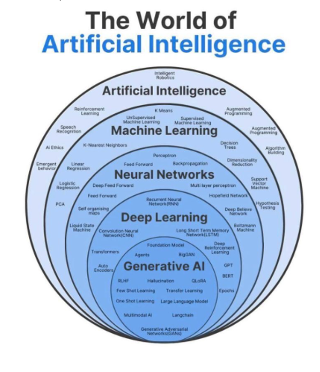
The three fundamental machine learning types - supervised, unsupervised, and reinforcement learning - each address distinct cybersecurity challenges. Supervised learning supports classification tasks, such as phishing email detection. Unsupervised learning excels in anomaly detection, revealing unusual behaviour on networks or endpoints. Reinforcement learning offers potential for adaptive defences, though this remains a developing field.
Understanding these foundations sets the stage for responsible AI deployment, helping organizations align capabilities with appropriate use cases and anticipate limitations.
AI Adoption Across Industries
The AI technological revolution is rapidly transforming all sectors, driven by competitive pressures, profitability improvements, and long-term survivability. Organizations increasingly rely on AI to extract insights from vast quantities of data, automate processes, and enhance strategic decision-making. AI is used to assess customer behaviour, identify market trends, improve operational efficiency, and support innovation cycles.
AI is transforming cybersecurity by enabling faster threat detection, automated analysis, and more adaptive defensive responses. At the same time, adversaries are using AI to scale attacks, evade controls, and increase the sophistication of phishing, malware, and social engineering campaigns.
This shift is increasing both the speed and volume of cyber threats, placing pressure on organizations to detect and respond in near real time. The threat landscape has expanded beyond what human analysts alone can effectively manage.
As a result, AI adoption in cybersecurity is no longer optional. Organizations must integrate AI-driven capabilities into monitoring, detection, and response workflows to remain effective against increasingly automated and sophisticated threats. Yet organizations must develop foundational AI literacy, ensuring leaders and practitioners understand how AI functions, where it excels, and where it fails. Without this literacy, organizations risk misapplying AI solutions or placing undue trust in outputs they do not fully understand. Foundational AI literacy must be deliberately developed across the following tiers to ensure cybersecurity teams, leaders, and users understand both defensive capabilities and adversarial risks:
Executive literacy – understanding strategic implications, risk, and governance responsibilities
Practitioner capability – applying AI tools appropriately within operational workflows
General workforce awareness – understanding appropriate use, limitations, and risks
In the public sector, these challenges are further compounded by constrained budgets, legacy technology environments, and heightened accountability to the public and regulators. This makes disciplined, risk-informed AI adoption even more critical.
Secure-by-Design AI and Organizational Maturity
From a cybersecurity perspective, secure-by-design AI means ensuring that AI systems themselves are resilient to attack, do not introduce new vulnerabilities, and are governed as part of the broader security architecture.
Assessing AI Maturity
AI maturity assessment has emerged as a critical theme. Before adopting AI, organizations must understand their readiness across technology, skills, data quality, governance, and cultural factors. Maturity assessments help clarify:
Where existing gaps lie
What competencies must be developed
How to prioritize investment
Where security risks may emerge throughout the AI lifecycle
A low-maturity organization may lack the data hygiene required to train accurate models. Conversely, a high-maturity organization may be prepared to integrate AI across the enterprise, aligning strategy, governance, and infrastructure
AI maturity is inseparable from data security and integrity maturity. Poor data governance is not only a quality issue but a security risk, enabling data poisoning, model manipulation, and unauthorized inference of sensitive information. Organizations must evaluate not only data quality, but also the presence of an enterprise data strategy, governance structures, and modern data architecture.
Without these elements, AI initiatives are constrained to isolated use cases and cannot scale across the enterprise.
Strategic Planning for AI Integration
Strategic planning ensures that AI adoption aligns with business goals. Leaders must connect AI initiatives to measurable outcomes and value, such as threat detection, operational efficiency, and risk reduction rather than deploying AI reactively or based on industry hype.
Effective AI strategy begins with a clearly defined enterprise data strategy aligned to organizational outcomes. This includes identifying priority data domains, defining key performance indicators, and ensuring the data sets are structured to support analytics and AI-driven decision-making.
Risk Management
Effective AI adoption demands that rigorous risk management practices are in place and consistently applied. Organizations must anticipate operational, ethical, legal, and reputational risks. These include:
Model drift
Data Poisoning
Bias
Overconfidence in outputs
Unexpected model behavior
From a cybersecurity perspective, these risks translate directly into control failure scenarios, including undetected intrusions, false assurance in monitoring systems, and increased time on the network for adversaries.
If not addressed, these risks can lead to operational disruption, loss of public trust, regulatory exposure, and increased recovery costs following incidents.
Risk management must span the full AI lifecycle and must be integrated into existing cybersecurity risk management frameworks, including threat modelling, control validation, and incident response planning.
For many public sector organizations, this begins with a pragmatic baseline: understanding data quality, validating existing governance structures, and identifying where AI introduces new or amplified risks.
Ethical and Responsible AI
Ethics anchors adoption, guiding how AI is designed, deployed, and governed within the organization. Responsible organizations must consider fairness, transparency, accountability, and unintended social consequences. This requires clear governance, including defined accountability for AI-driven decisions, validation of outcomes for bias, and appropriate human oversight of high-impact use cases. Ethical integration into all actions supports long-term trust, mitigates legal exposure, and ensures AI deployments do not reinforce pre-existing inequalities.
Responsible AI must be operationalized through governance bodies, policies, and training programs. Ethics cannot remain conceptual or experimental, it must be embedded into decision-making processes, supported by clear accountability and reinforced through organizational change management.
In cybersecurity contexts, ethical failures can directly translate into security failures, such as biased detection models missing threats or automated decisions introducing exploitable gaps. This reinforces the need for organizations to treat ethical oversight as a core security control, ensuring that AI-driven decisions are transparent, validated, and subject to appropriate human challenge.
Global AI Regulations and Governance Principles
The global regulatory landscape is evolving rapidly to govern the use of AI. Cybersecurity frameworks already offer strong control foundations for securing AI systems, including identity management, logging, monitoring, and incident response. A common misconception is that a new framework is required, however existing frameworks hold strong foundational controls that need to be augmented, not replace. Rather than building entirely new governance models, leaders should augment existing structures such as NIST Cybersecurity Framework, ISO/IEC 27001, and Centre for Internet Security (CIS) Controls. It is vital to also ensure alignment with broader financial, operational, and compliance oversight.
Common global regulatory themes include:
Transparency
Accountability
Fairness
Ethics in automated decision-making
Human-in-the-loop requirements
Risk classifications based on AI system criticality
Regulations emphasize that organizations must document AI behaviour, maintain auditability, and ensure decision-making processes remain explainable. AI governance should be flexible, as standards and regulations will continue to evolve at an exponential rate alongside technology.
Fortunately, there is a shift toward embedding ethical principles into standards. Regulatory bodies and professionals using AI are expected to consider how AI impacts fairness, avoid harm, and ensure responsible data stewardship.
In practice, this requires integrating AI oversight into existing governance structures, such as technology investment boards, architecture review boards, and risk councils. This ensures AI is governed alongside broader technology and business decisions, rather than treated as a standalone domain.
Critically, AI governance must be enforceable through technical security controls, not just policy, ensuring that AI systems are auditable, monitored, and resilient to misuse.
AI Security: The Risk of Overconfidence
One of the most significant challenges is to address the critical risk of overconfidence in AI. This is a material cybersecurity risk as AI-driven insights increasingly influence strategic and operational decisions, there is a growing risk that users and leaders place undue trust in these outputs. This can degrade human oversight, reduce critical challenge, and ultimately weaken detection and response effectiveness.
AI is an Augmenter, Not a Replacement
AI should support, not replace, human decision-making. It excels at processing large datasets, identifying patterns, and automating repetitive tasks. However, humans bring context, judgment, scepticism, and domain knowledge that AI cannot replicate.
Organizations must adopt hybrid models where AI handles triage and pattern detection, while humans validate important decisions.
Recognizing AI Blind Spots
AI suffers from data bias, incomplete coverage, and model drift. Blind spots can cause:
False negatives that allow attacks to evade detection
False positives that waste analyst time
Misinterpretation of new or evolving threats
Regular auditing and retraining are essential to minimize drift and maintain performance.
Automation Bias and Human Over-Reliance
Automation bias occurs when analysts place undue trust in AI-generated outputs. In cybersecurity, this can be catastrophic - alerts may be ignored or misclassified, allowing adversaries to move undetected.
Training must emphasize:
Critical evaluation of outputs
Manual validation of high-impact decisions
Scenario-based testing to build analyst intuition
Addressing automation bias requires structured change management, including training, communication, and reinforcement mechanisms that help individuals develop appropriate trust in AI systems.
Continuous Monitoring and Model Adaptation
AI models change over time as threats and data evolve. Without ongoing oversight, this can reduce detection accuracy and create security gaps. Organizations should treat AI systems like any other critical security control, with continuous monitoring for performance issues, unexpected behaviour, and potential misuse.
Regular review and retraining are essential to ensure models remain effective against current threats. This should be built into existing security monitoring and incident response processes, not managed separately.
Approaches such as federated learning can support this by improving model performance across organizations without sharing sensitive data.
Human-AI Collaboration in Incident Response
The most effective incident response models combine AI-generated insights with human judgment. AI accelerates evidence collection, correlation, and prioritization, while humans interpret context and execute strategic actions. AI-assisted playbooks exemplify this approach.
Governance and Ethical Oversight
Governance policies must define:
Model transparency
Bias mitigation
Auditability
Escalation pathways
Retention and deletion policies
Human-in-the-loop requirements
Strong governance builds trust and ensures compliance with global frameworks.
The Evolving Cybersecurity Workforce
AI is reshaping cybersecurity for the workforce, requiring a structured approach grounded in four key components:
· AI literacy and workforce enablement
· Responsible AI governance and oversight
· Structured change management and adoption strategy
· Leadership engagement and cultural alignment
These components collectively determine whether AI initiatives succeed or stall.
AI is reshaping cybersecurity roles and responsibilities. This will continue to evolve across the following impacts:
Automation of Repetitive Tasks
AI reduces analyst workload by automating:
Log analysis
Alert triage
Vulnerability correlation
Basic threat detection
This shift allows today’s knowledge professional to focus on high-value tasks such as threat hunting, strategic planning, and red-blue team analysis.
New Skills and Responsibilities
For continuing cybersecurity best practice users must develop new competencies, including:
AI literacy
Understanding of how models operate and can be exploited or manipulated
Ability to question AI decisions and recommendations
Skills to monitor and maintain AI systems
Governance and accountability for AI-supported security decisions
Professionals increasingly focus on supervising AI, managing expectations, and ensuring responsible use.
Cross-Functional Collaboration
Leadership plays a critical role in modeling AI adoptions. When leaders actively use AI to support decision-making and productivity, it signals organizational commitment and accelerates cultural acceptance.
AI adoption demands collaboration among:
Security teams
Business leaders
Developers and DevOps
Legal and compliance specialists
Data scientists
Interdisciplinary collaboration supports scalable and responsible AI deployment.
Responsible Use of AI (LLMs) in the Workplace
Employees require training on:
Risks of entering sensitive information into AI tools
Data anonymization
Organizational policies for AI usage
Regulatory compliance
Organizations must implement controls to prevent data leakage or model misuse.
Organizations that fail to invest in AI literacy and oversight capabilities risk creating a workforce that is overly dependent on tools they do not fully understand. This is dangerous.
AI for Cybersecurity: Threats, Attacks, and Mitigation
Unlike traditional systems, AI introduces new classes of vulnerabilities that attackers can actively exploit. There are many AI specific threats that require a deep dive and continued attention, including:
Prompt injection attacks against LLM-integrated workflows
Data poisoning and training data manipulation
Model evasion techniques that allow threats to bypass detection
Model extraction, where attackers replicate proprietary models
Membership inference and model inversion, which can expose sensitive training data
Dependency risks from third-party AI models and APIs
Organizations must secure the entire AI lifecycle – from requirement to design, development, deployment, monitoring, and retirement.
Effective mitigation strategies to focus on include:
Strong foundational cybersecurity controls
Regular monitoring for anomalous model behaviours
Use structured threat frameworks (such as MITRE ATLAS and PLOT4ai, in addition to aligning with existing frameworks like NIST and CIS Controls)
Attack simulations
Architectural safeguards such as sandboxing and input validation
A consistent message emerges: AI does not replace cybersecurity controls; it relies on them.
Synthesis: Integrating AI into Enterprise Cybersecurity Strategy
AI adoption sits at the intersection of two critical capabilities: enterprise data maturity and organizational readiness. Data provides the foundation for insight generation, while workforce capability and governance determine whether those insights translate into meaningful outcomes and value.
When combining all modules, several unifying themes emerge that require consideration.
Enterprise Data is the Foundation
AI effectiveness for cybersecurity is directly dependant on the quality, structure, and accessibility of enterprise data. Organizations must invest in data governance, modern data architecture, and analytics capabilities before AI can deliver sustained value. Without these foundations, AI initiatives remain fragmented and limited in impact.
Strong Foundations are Essential
AI inherits the weaknesses of the environment it is deployed in. Without:
Accurate and representative data
Robust identity governance
Secure infrastructure
Mature security operations
…AI cannot function effectively.
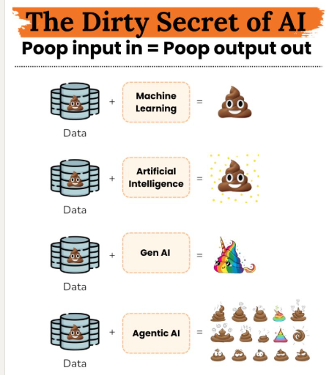
This is particularly relevant in public sector environments, where fragmented, often siloed systems and inconsistent data governance can significantly limit AI effectiveness.
Governance is the Anchor
Governance ensures:
Accountability
Alignment with strategy
Ethical behaviour
Responsible risk management
Transparency in automated decision-making
Human Oversight Remains Central
AI enhances decision-making but cannot replace human judgment. Humans contextualize outputs, identify errors, and ensure that AI supports, not supersedes, organizational values.
Workforce Readiness Determines Success
Organizations must invest in training, literacy, and interdisciplinary teamwork to fully leverage AI.
AI is a Long-Term Capability, Not a Short-Term Tool
Sustainable AI integration requires:
Continuous evaluation
Lifecycle management
Regular retraining
Adaptation to evolving threats and regulations
Key Takeaways for Leaders
AI amplifies both strengths and weaknesses in cybersecurity programs
Governance, not technology, is the primary determinant of success
Human oversight remains essential despite increasing automation
Workforce readiness is a critical and often underestimated factor
Conclusion
AI is fundamentally reshaping cybersecurity in profound ways, changing both how organizations defend and how adversaries attack. It enhances foundational controls, improves threat detection, strengthens governance, and transforms workforce capabilities. Yet it also introduces new risks (overconfidence, automation bias, data poisoning, model drift, and ethical concerns) that require thoughtful mitigation.
This paper reflects the full depth of integrating foundational concepts, secure-by-design principles, regulatory insights, AI security risks, workforce impacts, and applied cybersecurity practices. AI has extraordinary potential to support resilient, secure, and adaptive organizations, but only when implemented responsibly with human oversight.
For public sector organizations, the challenge is not whether to adopt AI, but how to do so responsibly within existing governance, funding, and accountability constraints.
Organizations that treat AI as a security capability and not just a productivity tool, will be better positioned to manage emerging threats.
The future of cybersecurity will depend on leaders who can blend AI capabilities with strategic governance, ethical considerations, and human judgment. Organizations that embrace this balance will be best positioned to thrive in an increasingly complex digital landscape.
Organizations should begin by assessing their readiness for AI adoption through the lens of governance, data quality, and risk management.
A practical path forward includes five steps:
Establish a data strategy aligned to service outcomes
Implement strong data governance and stewardship
Modernize data architecture and integration platforms
Enable analytics and insight generation capabilities
Operationalize data-drive decision-making across the organization
These steps provide the foundation upon with AI capabilities can be responsibly developed and scaled.
Key starting points include:
Evaluating existing governance structures and their ability to incorporate AI oversight
Validating data quality and classification practices
Identifying where AI may introduce new or amplified risks
Establishing these foundations will position organizations to adopt AI in a controlled, responsible, and sustainable manner.